
Dermal Fillers vs Botox | Which One Do You Actually Need?

Dermal Fillers vs Botox | Which One Do You Actually Need? If you’re trying to decide between Botox and dermal fillers, you’re really asking two different questions that sound like one. Botox and fillers are both injectable, both non-surgical, and both popular anti-aging treatments — but they solve completely different problems. At Dermalase Clinic, Islamabad’s leading dermatology and aesthetic clinic led by Dr. Shumaila Khan, patients from Islamabad and Rawalpindi are guided through this exact decision every week. This guide breaks down the real difference, so you know exactly what to ask for during your consultation. What Is the Difference Between Botox and Dermal Fillers? The simplest way to understand it: Botox relaxes muscle movement. Dermal fillers add volume. Botox is Botulinum Toxin Type A, an injectable that temporarily blocks the nerve signals telling a muscle to contract. When the muscle can’t move as forcefully, the skin above it stops creasing — which is why Botox works on dynamic wrinkles, the lines that only show up when you frown, squint, or raise your eyebrows. Dermal fillers are gel-like substances, most commonly hyaluronic acid, that are injected beneath the skin to physically restore lost volume or fill in a fold. They don’t affect muscle movement at all. Fillers work on static wrinkles and volume loss — the kind of change that’s visible even when your face is completely still, like hollow cheeks, thin lips, or deep nasolabial folds (the lines running from your nose to the corners of your mouth). Neither treatment is “better” in a general sense — they’re built for different concerns, and many patients in Islamabad eventually use both. How Does Botox Work? Botox is injected in small, precise doses directly into the targeted facial muscle using an ultra-fine needle. Once inside the muscle, it blocks the nerve signal that triggers contraction. Over the next 3 to 5 days, that muscle gradually relaxes, and by day 10 to 14 the full effect is visible: smoother skin above the treated muscle, with no change to facial volume or shape. Because it works on muscle activity rather than the skin’s structure, Botox is also used for non-cosmetic purposes — excessive sweating (hyperhidrosis), chronic migraines, and jaw tension from teeth-grinding (masseter Botox). How Do Dermal Fillers Work? Fillers are injected under the skin using either a fine needle or a blunt-tip cannula, depending on the area. Hyaluronic acid fillers attract and bind water, which is what creates the immediate plumping effect — results are visible the moment the injection is done, not days later. Other filler types work differently: calcium hydroxylapatite fillers add structural support, and poly-L-lactic acid fillers work more gradually, stimulating your own collagen production over several weeks rather than filling space instantly. Because fillers physically occupy space, they’re used anywhere the face has lost volume, shape, or definition — cheeks, lips, jawline, chin, temples, and under-eyes. Botox vs Dermal Fillers: Side-by-Side Comparison Factor Botox Dermal Fillers What it does Relaxes muscle contraction Adds volume beneath the skin Best for Dynamic wrinkles (expression lines) Static wrinkles, volume loss, contouring Common areas Forehead, frown lines, crow’s feet, jawline (masseter), underarms Cheeks, lips, jawline, chin, under-eyes, nasolabial folds, temples Onset of results 3–5 days, full effect by day 10–14 Immediate How long results last Roughly 4 to 6 months Roughly 6 to 18 months, sometimes longer depending on the filler type and area Reversible? Wears off naturally; no dissolving agent Hyaluronic acid fillers can be dissolved with an enzyme if needed Downtime Little to none Little to none, mild bruising/swelling possible Can they be combined? Yes Yes Which Areas Does Each Treatment Cover? Botox is typically used for: Forehead lines Glabellar lines (the “11” frown lines between the brows) Crow’s feet around the eyes Bunny lines on the nose bridge Gummy smile correction Jawline slimming (masseter Botox) for a wider jaw or clenching Neck bands (Nefertiti lift) Underarm, palm, or sole sweating (hyperhidrosis) Dermal fillers are typically used for: Cheeks — restoring mid-face volume Lips — adding volume and shape Jawline and chin — sharper definition and better profile balance Under-eyes — softening hollow, tired-looking areas Nasolabial folds and marionette lines Temples — filling hollow areas Nose — smoothing bumps without surgery (non-surgical rhinoplasty) Notice that these lists barely overlap. If your main concern is forehead lines or crow’s feet from expressions, filler won’t fix that — you need Botox. If your concern is a hollow under-eye or thinning lips, Botox won’t add anything there — you need filler. Can You Get Botox and Fillers in the Same Visit? Yes, and in practice, this is one of the most common requests at Dermalase. Because Botox addresses muscle movement and fillers address volume, they treat entirely different layers of facial aging — which means they don’t compete with each other, they complement each other. A typical combination approach might use Botox on the forehead and crow’s feet to stop new lines from deepening, while filler restores cheek volume and softens nasolabial folds in the same session or across a short treatment plan. Dr. Shumaila Khan will advise the safest sequencing and timing for your specific face during consultation, rather than doing both simply because it’s offered. Who Is a Better Candidate for Botox? You may be a better fit for Botox if you: Notice lines mainly when you make expressions (frowning, smiling, squinting), and they disappear when your face is at rest Want to prevent new expression lines from setting in early Are dealing with jaw clenching, teeth-grinding, or a wider jawline you’d like softened Struggle with excessive sweating in the underarms, palms, or soles Botox may not be recommended if you are pregnant or breastfeeding, living with a neuromuscular disorder such as myasthenia gravis, allergic to any component of botulinum toxin, or currently on certain blood-thinning medications. Who Is a Better Candidate for Dermal Fillers? You may be a better fit for fillers if you: Have noticeable volume loss in the cheeks, temples, or under-eyes Want fuller or better-shaped lips
How Long Do PRP Hair Results Last?
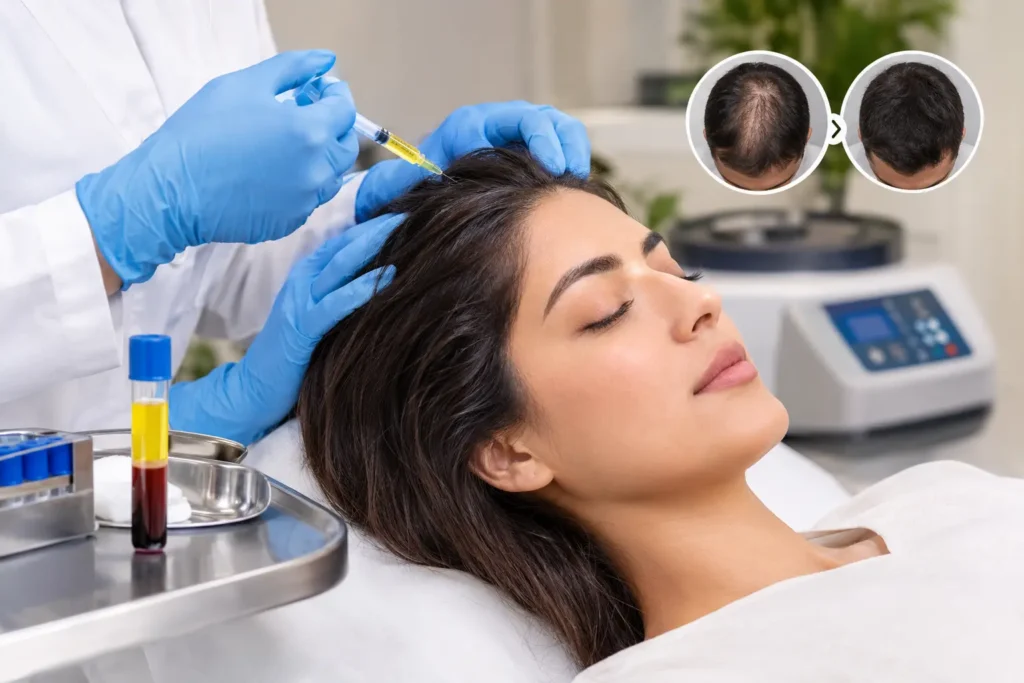
How Long Do PRP Hair Results Last? PRP hair results typically last 12 to 18 months after completing the initial treatment course, after which density gradually declines unless maintenance sessions continue. Timeline: How PRP Results Progress Over Time 0–2 months: No visible change yet; growth factors are reactivating dormant follicles beneath the surface. 2–3 months: Reduced hair shedding becomes noticeable, usually the first sign PRP is working. 3–6 months: Visible improvement in hair thickness and density. 6–12 months: Results typically peak, assuming the full initial course (3–4 sessions) was completed. 12–18 months: Results generally hold at their peak level without further sessions. 18+ months without maintenance: Density gradually declines back toward the pre-treatment baseline as the growth-factor effect wears off. Why PRP Results Fade Over Time PRP stimulates existing follicles, it doesn’t change the underlying cause of hair loss (genetics, hormones, aging). Once the growth-factor stimulation from a session fades, follicles that were reactivated can slowly return to their prior, less active state if the underlying cause is still present. This is why the effect is long-lasting rather than permanent. What Determines How Long Your Results Last Completion of the initial course: 3–4 sessions spaced 4–6 weeks apart is the standard protocol; stopping early shortens how long results hold. Maintenance sessions: A session every 6–12 months is what extends results beyond the initial 12–18 month window. Stage of hair loss at treatment start: Early-stage thinning holds results longer than advanced hair loss. Underlying cause: Hormonal/genetic hair loss (androgenetic alopecia) tends to resume progressing faster after stimulation stops, compared to temporary or stress-related shedding. How to Extend PRP Results Scheduling a maintenance session every 6–12 months after the initial course is what keeps results from declining back to baseline. Patients who skip maintenance typically see density fade by the 18–24 month mark; patients who maintain the schedule sustain results for years. PRP Hair Treatment at Dermalase by Dr. Shumaila Khan At Dermalase Aesthetic and Laser Clinic, PRP hair treatment plans are assessed and overseen by Dr. Shumaila Khan, Aesthetic Physician, alongside Dermalase’s in-house dermatology team. Your session count and maintenance schedule are based on your specific hair loss stage, rather than a fixed generic package- which is what directly affects how long your results end up lasting. Why PRP Results Last Longer at Dermalase Not all PRP treatments produce the same duration of results- the equipment, protocol, and diagnostic accuracy behind the treatment directly affect how long the platelet stimulation holds: Higher platelet concentration through proper centrifuge technology: a poorly calibrated or low-grade centrifuge yields weaker, less concentrated plasma, which produces a shorter-lived effect on follicles. Dermalase uses [clinic to confirm: exact centrifuge/PRP system name] to ensure a consistently high platelet yield per session. Accurate hair loss staging before treatment: Dr. Shumaila Khan and the dermatology team assess exactly which stage of hair loss you’re in before treatment, so the session count and technique match your follicles’ actual condition rather than a generic package. Mismatched staging is one of the most common reasons PRP results fade faster at clinics that skip proper assessment. Protocol adherence: the 3–4 session initial course spaced correctly at 4–6 weeks apart is followed strictly, since skipping or compressing this spacing is a major cause of shorter-lasting results elsewhere. Data-informed maintenance scheduling: instead of a fixed “come back whenever” approach, maintenance timing is based on how your specific hair has responded in prior sessions, extending results further than a one-size-fits-all schedule. Note for Dermalase team: please confirm the exact centrifuge/PRP system used so we can name it specifically – a named, verifiable device is a stronger trust signal than a generic description. Book a PRP Hair Consultation at Dermalase Ready to find out how PRP can work for your hair, and how long you can realistically expect the results to last? Book a consultation with Dr. Shumaila Khan and the Dermalase dermatology team – your hair loss stage will be properly assessed before any treatment plan is recommended. Call or WhatsApp Dermalase at (+92) 304-1110844 to book your consultation. Visit the clinic at 103, Main Sumbal Road, F-10/1, Islamabad, or book through the Dermalase website. Get your scalp and hair loss stage assessed by the dermatology team. Start your personalized PRP treatment plan, built around your hair – not a generic package. Call/WhatsApp: (+92) 304-1110844 Address: 103, Main Sumbal Road, F-10/1, Islamabad
HydraFacial in Islamabad
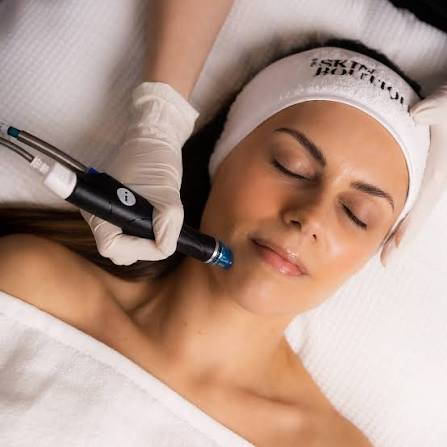
HydraFacial in Islamabad Dermalase Clinic by Dr. Shumaila Khan offers professional HydraFacial in Islamabad to help improve skin hydration, texture and overall appearance. This advanced facial treatment combines deep cleansing, exfoliation, hydration and skin nourishment for a refreshed look. With personalised care and expert guidance, patients can choose HydraFacial treatment according to their skin needs. Visit Dermalase Clinic for a skin consultation. 5k+ Satisfied Patients Book Consultation Now HydraFacial in Islamabad is a medical-grade, non-invasive skin resurfacing treatment that cleanses, extracts, and hydrates the skin in one 30-45 minute session using vortex-fusion technology. At Dermalase Clinic Islamabad, a single session starts at PKR 6,999, with advanced booster packages performed under the supervision of the dermatologist at Dermalase Clinic. What Is HydraFacial? HydraFacial is a patented, multi-step hydradermabrasion treatment. It is not the same as the generic “hydra facial” machines used in beauty salons- genuine HydraFacial devices use a proprietary vortex-fusion tip system that simultaneously exfoliates the skin and delivers serum, rather than simple water-jet exfoliation. At Dermalase, every session is performed using medical-grade vortex-fusion HydraFacial technology under the supervision of the dermatologist at Dermalase Clinic, which is what separates a medical-grade session from a market “glow facial.” If a clinic cannot explain its technology or supervision, it is very likely offering an unbranded knockoff a distinction worth knowing before you book. Core entity attributes: Category: Non-invasive dermatological/aesthetic procedure Technology: Vortex-fusion exfoliation + serum infusion + LED light therapy Duration: 30–45 minutes Downtime: None to minimal redness (1–2 hours) Recommended frequency: Every 4–6 weeks for maintenance HydraFacial Cost in Islamabad Here’s exactly what each Dermalase tier includes. Package Includes Best for Starting Price (PKR) Signature HydraFacial Cleanse, exfoliate, extract, hydrate (4 core steps) First-timers, general dullness, light maintenance PKR 6,999 Deluxe HydraFacial Signature + LED light therapy + 1 booster (Vitamin C / GlySal) Acne-prone skin, mild pigmentation PKR 10,999 Platinum HydraFacial Deluxe + lymphatic drainage + 2 boosters + eye/lip perk Anti-aging, dehydrated or combination skin, pre-event glow PKR 16,999 HydraFacial for Men Signature/Deluxe adapted for thicker skin and sun-tanned areas Sun exposure, ingrown hairs, oily T-zone PKR 9,999 Bridal / Pre-Event Package (4 sessions) Weekly session for 4 weeks, escalating boosters Weddings, photoshoots, major events Contact for package pricing What changes your price: number of boosters added, whether LED and lymphatic drainage are included, and whether you buy a single session vs. a 4–6 session maintenance package (packages typically save 10–20% per session). Is Dermalase Cheaper or More Expensive Than the Islamabad Average? Dermalase Clinic sits in the mid-to-premium band because sessions are performed under dermatologist supervision rather than by an aesthetician alone — a distinction that matters for anyone with active skin conditions (acne, rosacea, melasma), not just cosmetic maintenance. The HydraFacial Process at Dermalase — Step by Step Skin Consultation & Analysis: a skin assessment maps hydration, pigmentation, and pore congestion before treatment is customized. Cleanse + Peel: a gentle glycolic/salicylic solution loosens dead skin cells. Extraction: painless vortex suction clears blackheads, whiteheads, and debris without manual squeezing. Hydration & Serum Infusion: antioxidants, peptides, and hyaluronic acid are infused into the skin via the same vortex tip. Booster (optional): targeted serum for pigmentation, acne, or fine lines, chosen based on the consultation. LED Light Therapy (Deluxe/Platinum): red light for collagen stimulation, blue light for acne-causing bacteria. Who Should (and Shouldn’t) Get a HydraFacial Good candidates: Dull, dehydrated, or congested skin Mild to moderate acne and enlarged pores Early pigmentation and sun damage (common in Islamabad due to dust and UV exposure) Pre-wedding/pre-event skin prep Fine lines and early aging concerns Proceed with caution- consult first: Active isotretinoin (Accutane) use within the last 6 months Pregnancy (some boosters/acids are avoided; a hydration-only protocol is used instead) Active cold sores, open wounds, or sunburned skin Recent chemical peel or laser treatment (within 7 days) Uncontrolled rosacea flare (a modified low-suction protocol is used, not a full session) HydraFacial vs. Other Facials — How It Compares Treatment Downtime Best for Typical frequency HydraFacial None Hydration, mild pigmentation, congestion, all skin types Every 4–6 weeks Chemical Peel 2–5 days peeling Deeper pigmentation, active acne, scarring Every 3–4 weeks (course) Microdermabrasion Minimal redness Surface texture, dullness only (no hydration infusion) Every 3–4 weeks Classic Spa Facial None Relaxation, superficial cleansing As desired Aftercare: What to Do (and Avoid) for 24–48 Hours Avoid makeup for 6–12 hours if possible. Skip retinoids/exfoliating actives for 48 hours. Use SPF 30+ the next morning — Islamabad’s UV index is high most of the year. Avoid saunas, steam rooms, and intense workouts on treatment day. Why Choose Dermalase Islamabad Sessions supervised by the dermatologist at Dermalase Clinic Medical-grade vortex-fusion HydraFacial technology — not a generic hydra-dermabrasion machine Transparent, tier-based pricing (no “starting from” games) Conveniently located in Islamabad, serving clients from Blue Area, F-6, F-7, F-8, F-10, DHA, and Bahria Town Verified before/after results and patient reviews Ready to Book Hydrafacial Treatment in Islamabad? You want affordable Hydrafacial Treatment in Islamabad? Book a consultation at Dermalase Clinic, Islamabad, and get a personalized HydraFacial plan based on your skin type and concerns. Call/WhatsApp on (+92) 304-1110844 and book your appointment at dermalase clinic Islamabad. Frequently Asked Questions Is HydraFacial safe for sensitive or acne-prone skin in Pakistan’s climate? Yes, when the booster and suction intensity are adjusted for your skin type, this is why a dermatologist-led consultation matters more in Islamabad’s dusty, high-UV environment than in a controlled spa setting. How is Dermalase’s HydraFacial different from a “glow facial” advertised on Instagram? Genuine HydraFacial uses patented vortex-fusion technology under medical supervision; ultra-low-cost “glow facials” typically use unbranded machines or manual extraction rebranded as HydraFacial. Always ask how the treatment is performed and by whom before booking. How many sessions will I need to see results? One session gives visible glow immediately. For pigmentation, acne marks, or anti-aging concerns, a course of 4–6 sessions spaced 3–4 weeks apart is typically recommended. Can I get a HydraFacial while pregnant or breastfeeding? A modified, booster-free hydration protocol can usually be done, always disclose